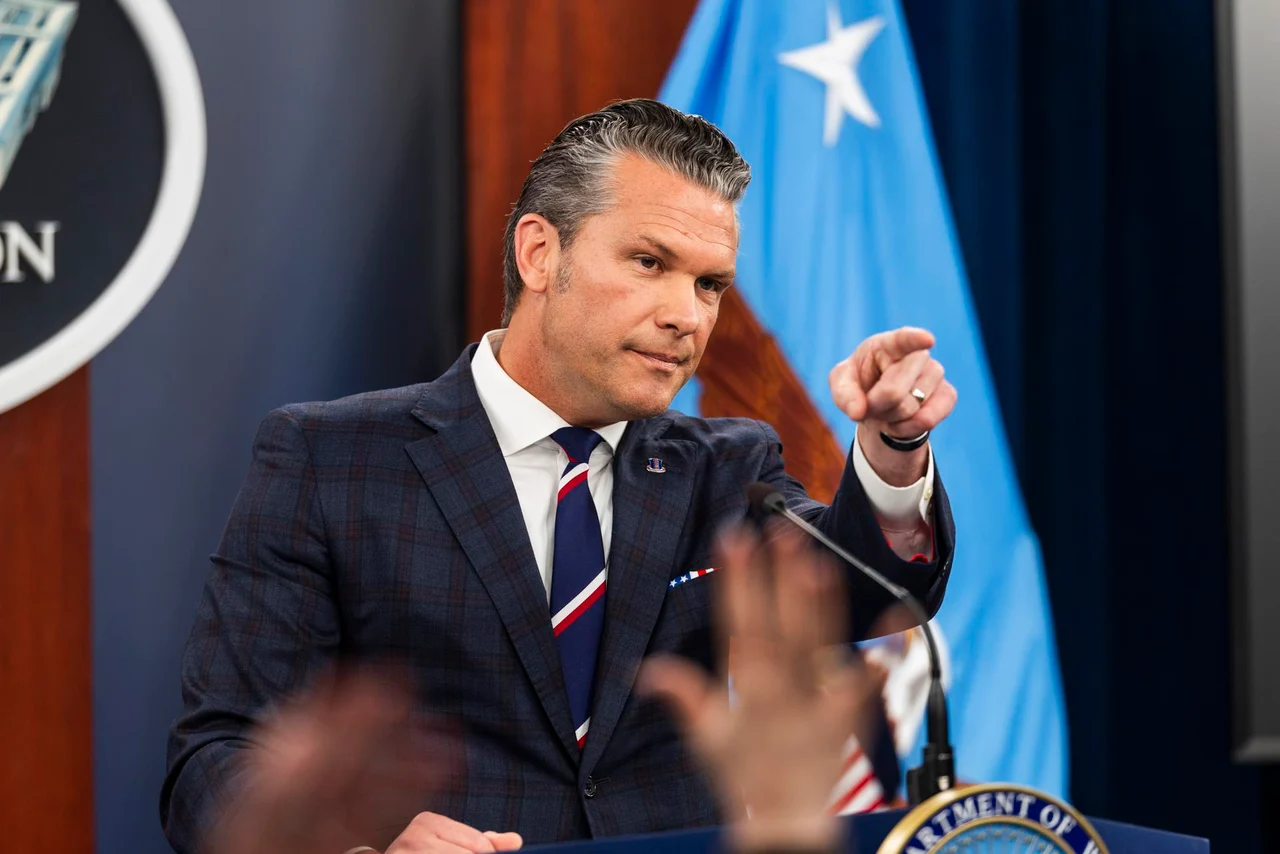
Summary: A Republican congressman is seeking to remove Trump's defense secretary over military operations in Iran, Venezuela and the Caribbean. The House of Representatives could vote Tuesday.
Why it matters: Defense Secretary Pete Hegseth faces one of the biggest threats to his place in Donald Trump's administration. A lawmaker from his own party accuses him of using U.S. military power without congressional authorization, putting lives, constitutional rights and national security at risk.
Trump publicly came to Hegseth's defense. The president attacked Massie and urged Congress to back the defense secretary, pointing to the military operations in Iran and Venezuela as victories for his administration. This tempers the impression that Trump had withdrawn his support for Hegseth.
Democrats are not acting as a uniform bloc either. According to CBS News, their leaders are not formally pressuring all of their representatives to vote for impeachment. Each lawmaker will decide individually, although Hakeem Jeffries and Pete Aguilar have already announced their support.
Rep. Thomas Massie of Kentucky on Monday formally filed eight articles of impeachment against Pete Hegseth, the U.S. secretary of defense.
Massie argues that Hegseth committed serious abuses of power by carrying out military operations that, in his reading of the Constitution, required congressional authorization.
The move comes just one week after congressional elections that brought significant losses for the Republican Party and heightened tensions inside the Trump administration.
House Democratic leader Hakeem Jeffries also voiced support for removing Hegseth, accusing him of contributing to a war that has driven up prices and weakened American security.
The resolution Massie filed covers some of the most controversial military decisions of Trump's second term.
1. Starting the war against Iran without authorization. Massie argues that Hegseth carried out orders to begin military operations against Iran without a declaration of war or legislative authorization.
2. Ignoring a resolution from Congress. The lawmaker accuses the secretary of continuing military operations despite a measure passed by both chambers demanding an end to hostilities.
3. Illegally prolonging the war. The charge argues that operations continued beyond the time limits set by the War Powers Act of 1973.
4. Weakening civilian protections. Massie holds Hegseth responsible for dismantling mechanisms meant to prevent civilian casualties. The resolution links these decisions to a strike on an Iranian school that, according to reports cited by CBS News, left approximately 170 dead, most of them children. The United States has not directly accepted responsibility for the bombing.
5. Carrying out extrajudicial strikes in the Caribbean and the Pacific. The resolution challenges operations against alleged drug-trafficking boats that, according to the document, have caused at least 243 deaths since September 2025.
6. Retaliating against a senator. Hegseth is accused of trying to punish Democratic Sen. Mark Kelly, a Navy veteran, after Kelly publicly reminded service members that they can refuse illegal orders.
7. Ordering the operation against Nicolás Maduro. Massie challenges the legality of the January 2026 U.S. intervention that ended with the capture of then-Venezuelan President Maduro and his wife. The charge argues that it was a military operation carried out without congressional authorization and tied to U.S. interest in Venezuelan oil.
8. Attacking Yemen without legislative authorization. The final charge concerns the U.S. bombings of Houthi targets in 2025 and the civilian casualties they caused.
These are accusations made by Massie, not judicial findings of guilt.
For millions of Hispanics in the United States, this political clash has implications that go beyond Washington.
The military operations in Venezuela raise questions about the limits of U.S. intervention in Latin America. Although Maduro's capture was celebrated by some sectors of the Venezuelan diaspora, the resolution forces another question: can a U.S. president order a military intervention of that magnitude without congressional authorization?
The strikes on alleged drug-trafficking boats also raise questions about due process. The charge argues that people suspected of crimes were attacked militarily without having been tried.
The distinction is fundamental: fighting drug trafficking is a responsibility of the state, but authorities must also show that the use of lethal force complies with applicable law.
Massie's push reflects a growing tension between Republicans who support a foreign policy of greater military intervention and those who defend strict limits on presidential power.
According to The Washington Post, Massie argues that Hegseth carried out illegal orders and represents a threat to the constitutional order.
President Trump has also publicly pointed to Hegseth's responsibility in the war against Iran, although that does not amount to backing his removal.
Meanwhile, some Republicans have expressed reservations about the defense secretary's leadership, although they do not necessarily share Massie's eight arguments.
Hegseth rejected the accusations at a news conference Tuesday, calling the process a political spectacle.
The House of Representatives is expected to vote on the resolution Tuesday afternoon.
However, that vote does not necessarily mean Hegseth will be removed. Lawmakers can approve the charges, reject them, postpone consideration or send them to a committee.
If the House formally approves the articles of impeachment, the process would move to the Senate, where a conviction requires the support of two-thirds of the senators present.
The underlying question: Beyond Hegseth's political future, this clash tests a central principle of American democracy: how far the president's military power can go without Congress's consent.
And for a Latino community with family, economic and cultural ties throughout the Americas, the answer may have consequences much closer to home than it seems.
Here are the references I recommend linking in the published version:
The Center Square — original article. Initial source provided, whose full text I could not retrieve.
CBS News — The Eight Charges Against Hegseth. Detailed breakdown published November 10.
The Washington Post — Start of the Impeachment Process. Constitutional and political context.
The New Republic — Thomas Massie Pushes for a Vote. Background on the Republican initiative.