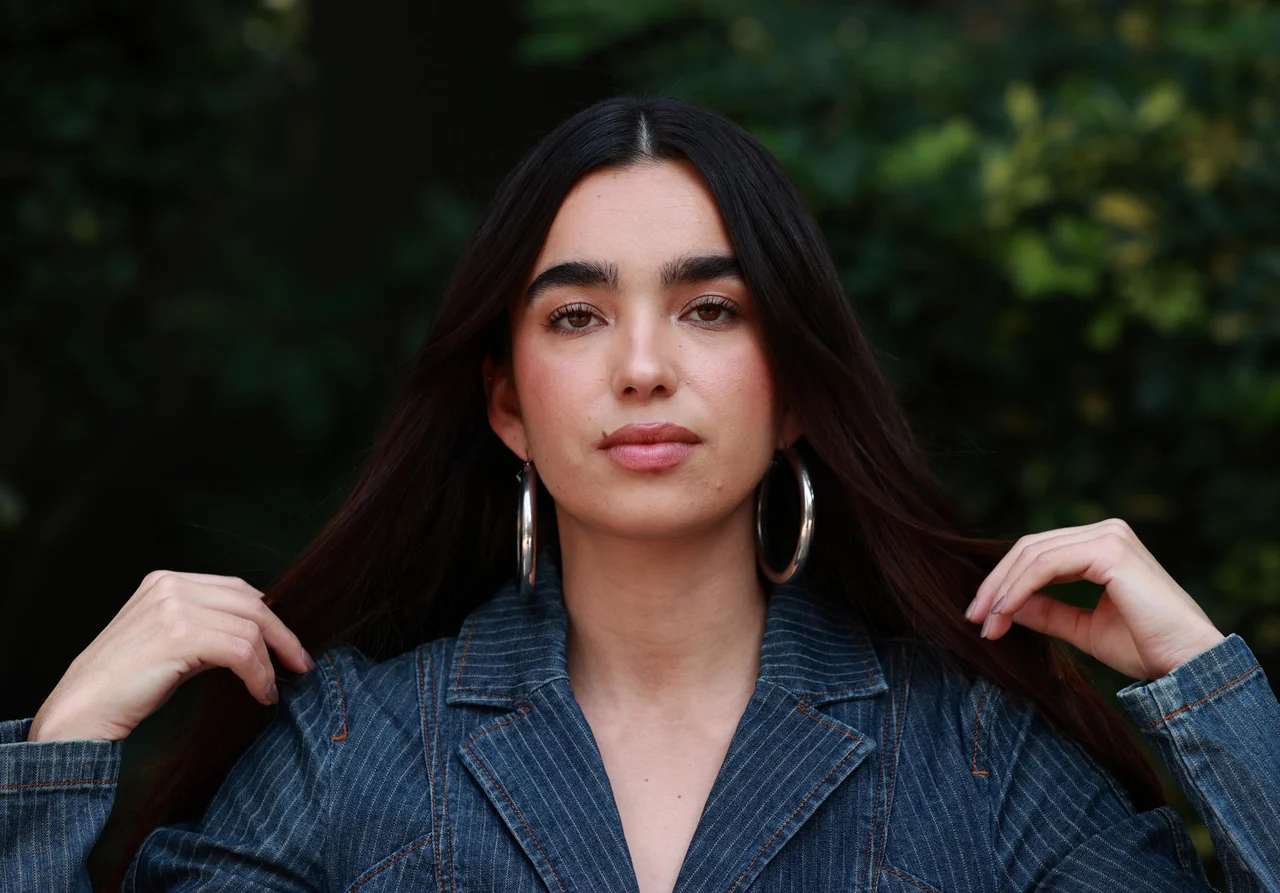
Have you ever felt like you’re not entirely from here or entirely from there? That is exactly what Sofia Monroy sings about. She is a 27-year-old Swedish-Mexican singer-songwriter and a nominee for Best New Artist at the 2026 Latin Grammys. She spoke with EFE from Mexico City in an interview by Ana Báez, published Monday, November 9.
Monroy grew up in Luleå, Sweden, and three years ago moved to Mexico to reconnect with her roots. There she learned Spanish from scratch. Her first album was “Morena” (2025), and she is now presenting her second, “WO[E]MAN,” with 11 songs and a short film directed by Jesús Soto Fuentes and Manuel Gómez González.
According to EFE, she isn’t interested in “following the rules” of the industry, but in exploring her “duality” with songs in Spanish and English that challenge gender roles. Where does that idea come from? She explains it herself: “My dad died when I was eleven years old, and my mom took charge of working and raising four children. So I didn’t grow up in an environment with established gender roles, and this album comes from that, from the question: What does it mean to be a woman?”
The title plays on the English word for woman, and Monroy says it means “sad man.” As she tells it: “I’m neither Mexican nor Swedish, and this is the first album where I embrace that duality. I also allow myself to explore the term WO[E]MAN, which means ‘sad man.’ I realized that inside me there is a sad man who puts certain ideas in my head.”
She has been writing songs in English for ten years and now wants to move them more and more into Spanish, a language she finds “stimulating” because of what “Latin rhythm” represents in the world. As for Swedish, she is direct: “I’ve never been one to follow the rules, so I never wanted to sing in Swedish. It’s also true that only ten million people understand the language.”
Her ear lives in two worlds. On one side are Luis Miguel and Alejandro Fernández, whom her father, who was of Mexican descent, listened to at “Tapachula,” the restaurant he owned in Sweden until his death. On the other is Swedish pop: ABBA, Robyn, Icona Pop and Zara Larsson.
According to the Latin Recording Academy and Flow Magazine, the category has 11 nominees: Delilah, Fabian, Loulu Gilberto, Arath Herce, Macario Martínez, maye, Sofia Monroy, Kendall Peña, Dora Sanches, ARIA VEGA and Zeca Veloso.
Monroy doesn’t talk about rivals, but about fellow artists. She thinks of the other women in her category, such as Mexican American singer Delilah: “How chido (in Mexico, ‘good’) that there are so many badass women in the industry who are being themselves and people are liking it. It’s a counterculture and the opposite of the polarization we’re living through.”
Maybe a lot. If you are an immigrant, or the child of immigrants in the U.S., you know that back-and-forth between two languages, two cuisines and two ways of naming yourself. Billboard highlighted her song “Alma dividida,” about belonging to more than one place, an experience shared by many immigrants and their children.
Monroy sees it as something of our era: “Artists are the result of the world we live in, a globalized world, where your aunts and uncles went to live somewhere else or where you’re no longer only from the place where you were born. I feel that a lot of people can identify with that feeling of a divided soul.”
And she adds something that sounds familiar in the age of borderless playlists: “You used to listen only to what was in your country; now I listen to music in Arabic or French, languages I don’t even speak, but that I can feel.”
The Latin Grammy ceremony takes place this Thursday, November 12, 2026, at the MGM Grand Garden Arena in Las Vegas, and Univision will broadcast it. Before the gala, it’s worth checking out “Alma dividida” and “WO[E]MAN” to decide whom you’re going to root for.
And if you’re interested in how other artists live between two cultures, read about Becky G and her “unapologetic” Spanglish. Tell us: do you also feel like your soul is a little bit divided?
Sources: Latin Recording Academy; Flow Magazine; Billboard. Information accessed on November 10, 2026.
Main photo: EFE/Mario Guzmán