

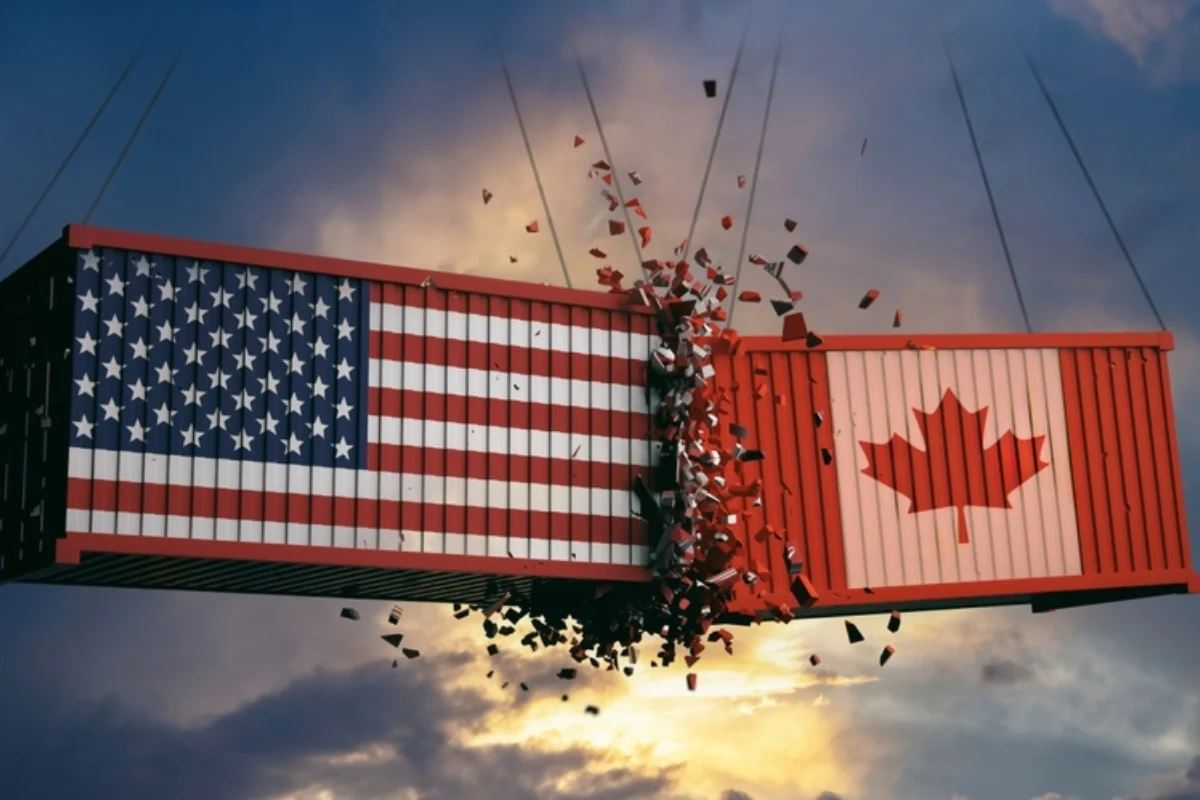
Donald Trump opened another front in the US-Canada trade war by ordering the removal of Canadian products from federal contracting programs worth $50 billion.
The directive affects the General Services Administration’s (GSA) Multiple Award Schedules, which government agencies use to purchase a wide range of commercial products and services.
Trump conditioned Canada’s access on what he called “full and fair reciprocity” for US farmers and businesses.
“From now on, no reciprocity, no access!” the president wrote on Truth Social, accusing Canada of limiting opportunities for US companies in its public procurement system.
Trump Escalates US-Canada Trade War With $50 Billion Contract Ban – Photo: Shutterstock The decision expands the conflict beyond tariffs: Washington is now also using the federal government’s enormous purchasing power as a tool to pressure Canada.
The Office of the US Trade Representative (USTR) confirmed that Trump instructed it and the GSA to remove $50 billion in Canadian-origin products from multiple-award programs.
YOU MAY BE INTERESTED IN: US Gas Prices Surpass $4.22 as Iran Conflict Hits Drivers’ Wallets
The move came after Canada imposed retaliatory tariffs of 15%, 25%, and 50% on US imports on September 8.
The Canadian tariffs cover C$27.6 billion in imports and affect sectors including steel, dairy, appliances, agricultural equipment, paper, and electronics.
Ottawa presented its tariffs as an equivalent response to the 50% US tariffs on C$27.6 billion in Canadian products that took effect on August 22.
The Canadian government says it suspended negotiations after concluding that Washington’s latest proposed conditions would harm the country’s workers, businesses, and strategic sectors.
Prime Minister Mark Carney has proposed reducing Canada’s historic dependence on the US market by diversifying trade and strengthening domestic production.
The conflict adds uncertainty to a deeply integrated economic relationship and raises questions about the future of North American trade as both governments continue imposing restrictions.
Trump went further: the US will ban certain Canadian imports beginning September 29, including categories of dairy products, alcoholic beverages, and motorcycles.
The distinction matters to businesses and consumers: a ban directly prevents affected products from entering the country, while a tariff permits their importation after payment of an additional tax.
The White House justified the new measures under Section 338 of the Tariff Act of 1930 and accused Canada of maintaining discriminatory practices against US exports.
With federal contracts, tariffs, and import bans now in play, the dispute between the US and Canada is entering a more aggressive phase, while the possibility of renewed negotiations remains open, according to EFE, Diario Estrategia, and El Heraldo.


