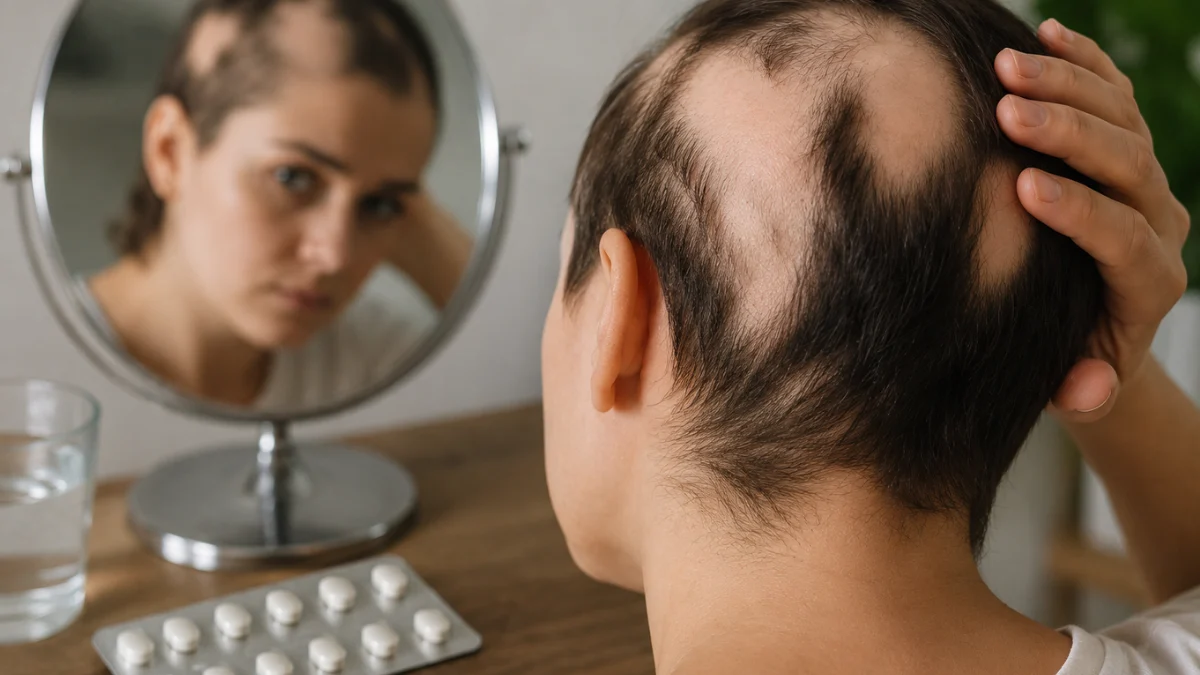
A medication already used to treat inflammatory diseases such as rheumatoid arthritis is showing promising results for people with severe alopecia areata, an autoimmune condition that can cause extensive hair loss.
The drug is upadacitinib, sold under the brand name Rinvoq, and two phase 3 clinical trials found that a significant proportion of patients regrew enough hair to reach at least 80% scalp coverage after 24 weeks of treatment.
The results, published on August 12, 2026, in JAMA Dermatology, included 1,399 adults and adolescents with severe alopecia areata, making the study a large investigation into this potential new use of the medication.
Upadacitinib for Alopecia Helps Patients Regrow Up to 80% of Their Hair – PHOTO: Shutterstock Participants were between 12 and under 64 years old and had lost at least half of their scalp hair when they entered the study.
They were assigned to receive either 15 milligrams of upadacitinib daily, 30 milligrams, or a placebo, while researchers evaluated how much hair they regrew during the first 24 weeks.
The results showed a considerable difference compared with placebo:
In addition, approximately 13% of those who received the 15 mg dose and 23% of those treated with 30 mg achieved complete scalp hair regrowth at 24 weeks, according to results released from the clinical program.
The explanation is related to the cause of alopecia areata: it is not simply ordinary hair loss.
With this condition, the immune system mistakenly attacks hair follicles and can cause bald patches or progress to much more extensive hair loss on the scalp and other parts of the body.
Upadacitinib belongs to a family of medications known as Janus kinase inhibitors, or JAK inhibitors, which interfere with certain signals involved in inflammation and immune system activity.
By blocking those pathways, the treatment may reduce the immune attack on hair follicles and allow them to begin producing hair again.
The medication is already approved in the United States for several inflammatory diseases, including rheumatoid arthritis, Crohn’s disease and ulcerative colitis, but that does not mean people with alopecia should begin using it on their own.
The results are encouraging, but there is an important difference between saying that some patients reached 80% scalp coverage and claiming that the medication restores 80% of everyone’s hair.
In fact, roughly half of the participants reached the primary goal, depending on the dose, while others did not achieve that level of response.
There is also currently no definitive cure for alopecia areata, and responses to treatment can vary significantly from one patient to another.
Another important issue is safety: upadacitinib for alopecia would involve a medication that alters immune system activity and, like other drugs in this class, requires medical evaluation and monitoring.
In the trials, the safety profile during the first 24 weeks was consistent with what has been observed in conditions for which the medication is already approved, and researchers said they did not identify any new safety signals.
Upadacitinib for Alopecia Helps Patients Regrow Up to 80% of Their Hair – PHOTO: Shutterstock Here is one of the main cautions for people who learn about these results: the FDA is still specifically evaluating the use of upadacitinib for severe alopecia areata.
AbbVie submitted an application in April 2026 to expand Rinvoq’s indication to adults and adolescents with the condition, based on the phase 3 clinical program.
For that reason, the findings do not mean that someone experiencing hair loss should ask for Rinvoq or use arthritis medications without medical supervision.
Alopecia areata is also only one cause of hair loss. Other causes can be related to genetics, medications, hormonal changes, medical conditions and various other factors.
For millions of people living with a condition that can affect not only appearance but also self-esteem and quality of life, expanding treatment options could represent an important advance.
YOU MAY ALSO BE INTERESTED IN: Study Reveals the Unexpected Link Between Coffee, Body Fat, and Testosterone in Men
SOURCE: National Alopecia Areata Foundation (NAAF) / Cleveland. / Medical News Today / Healthline