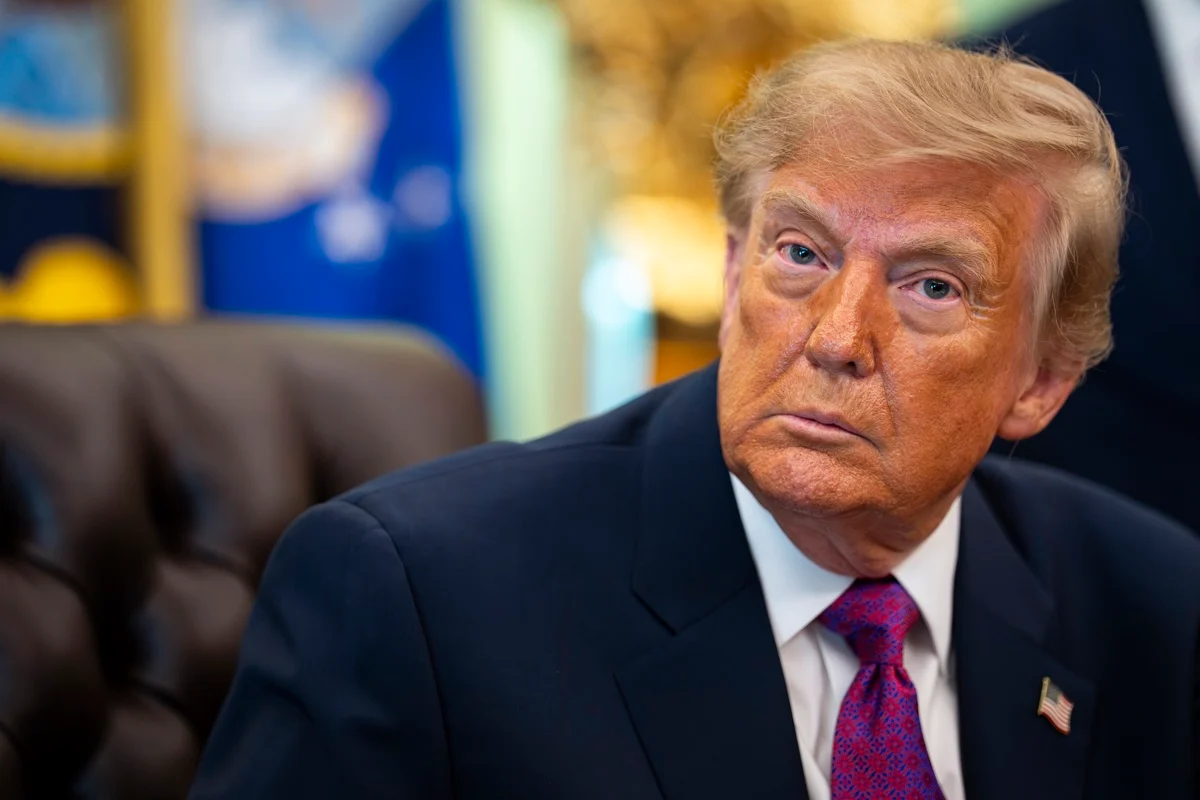
President Donald Trump is again opening the door to an agreement that could end the war, but Iran says it will not negotiate until Washington meets its conditions.
Trump said he is willing to negotiate an end to the conflict with Iran and claimed that Tehran wants an agreement “quickly and at all costs.” Iran responded that talks would not begin without prior concessions, according to EFE.
View Election Hub →.
“The decadent nation of Iran wants to reach an agreement, quickly and at all costs,” Trump wrote Monday on Truth Social.
Trump added that he would decide whether the United States enters negotiations with Iran and said Washington remains open to that possibility.
Tehran offered a different account. Mohsen Rezaei, secretary of Iran’s Supreme National Security Council, said Tuesday that the United States must first meet Iran’s demands.
The Iranian official also questioned what he described as Trump’s “contradictory signals” regarding potential negotiations.
Don’t get distracted by the U.S. president’s mixed signals—from “no negotiations” to “we’re ready to talk.” The stakes around oil and the straits have changed. Damage control won’t stop what’s coming. No talks until Iran’s conditions are met. Period!
— محسن رضایی (@ir_rezaee) September 14, 2026
Negotiations between the Trump and Iran would not be unprecedented. Washington and Tehran reached the Islamabad Memorandum in June through Pakistani mediation.
The understanding included a ceasefire, the reopening of the Strait of Hormuz, the lifting of the US naval blockade, and measures involving sanctions and frozen Iranian funds.
However, Washington ended the agreement in July following Iranian attacks on oil tankers and other vessels in the strait, according to EFE.
Iran now demands that the United States return to the memorandum’s commitments before the Strait of Hormuz is fully reopened.
Trump directly connected the end of the conflict with energy prices.
“Oil will plummet as soon as the military conflict with Iran ends,” he said.
The Strait of Hormuz is central to that prediction.
The US Energy Information Administration reported that oil flows through the strait declined from 21.6 million barrels per day in the fourth quarter of 2025 to 4.9 million barrels per day in the second quarter of 2026.
The disruptions have reduced oil flows and increased volatility in international crude prices, with consequences for fuel markets.
The possibility of negotiations with Iran to end the conflict also comes before the November 3 midterm elections.
The electoral calendar increases the political importance of energy prices, although it does not establish that the election prompted Trump’s renewed openness to negotiations.
Trump also rejected reports that the US military is concerned about its ammunition stockpiles.
“Our defense factories operate 24 hours a day, seven days a week,” he said, mentioning Patriot and THAAD systems as well as Tomahawk missiles.
For now, that disagreement leaves the main question unanswered: whether this new diplomatic signal can end the war or become another attempt that fails to produce a lasting agreement.
You May Be Interested In: US Confirms Space Weapons Deployment as China and Russia Respond
SOURCE: SWI / EFE