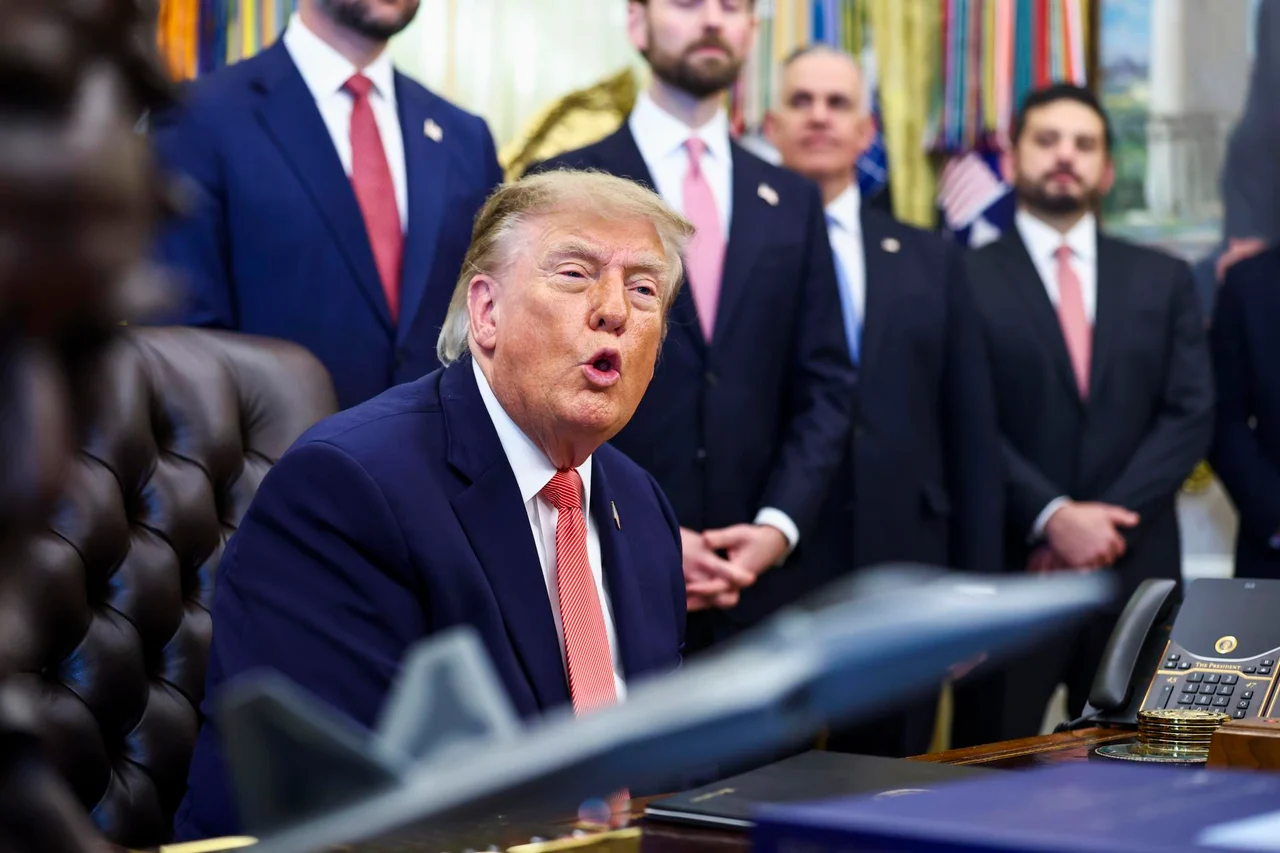
Donald Trump created the Superintelligence Force, a new federal committee, on Sunday to coordinate the US strategy on artificial intelligence.
The structure's mission will be to maintain the US technological leadership and connect federal policies with businesses, consumers, and other sectors. In contrast, the committee will report directly to the President and White House Chief of Staff Susie Wiles, according to the announcement released by Trump. President believes this technology could have an impact comparable to, or even greater than, that of the Internet and the Industrial Revolution.
President Donald Trump announced the creation of the “Super Intelligence Force”, a group that will coordinate federal government efforts to ensure US leadership in superintelligence artificial intelligence and its relationship with tech companies, infrastructure providers, and other sectors.
Photo: AP
— N+ UNIVISION (@nmasunivision) October 4, 2026
The new force will be headed by National Intelligence Director Jay Clayton, who will play a central role in the technological strategy.
Andrew Ferguson, Chairman of the Federal Trade Commission; Emil Michael, a senior Pentagon tech official; and Scott Kupor, Director of OPM, will also participate.
Their work will include coordinating federal relations with consumers, public interest organizations, critical infrastructure providers, and companies developing these technologies.
The creation of the group elevates artificial intelligence to a cross-cutting issue involving innovation, national security, infrastructure, regulation, and economic competitiveness.
Donald Trump announces the creation of the ‘Superintelligence Force’, a coordination committee within the White House and the federal government that will lead the development of AI in the country. https://t.co/vjtOEFB5XQ
— EFE Noticias (@EFEnoticias) October 4, 2026
This decision comes after Trump ordered federal official communications to use «superintelligence» instead of «artificial intelligence.»
The change is primarily terminological: existing legal definitions of artificial intelligence were not automatically replaced by the new federal designation.
YOU MAY BE INTERESTED: T rump insists on his promise of $5,000 for adults if Republicans win in November
The concept also generates debate because «superintelligence» already has another meaning in the tech sector: hypothetical systems capable of vastly surpassing human capabilities.
However, the administration uses the term more broadly to identify AI technologies it considers fundamental to US competitiveness.
Trump previously met with tech leaders at the White House to discuss security, development of advanced models, and the necessary infrastructure to support them.
Participants included representatives from Google, xAI, Anthropic, Meta, Nvidia, and OpenAI, key players in the US race to develop new models.
The companies backed a voluntary agreement that includes internal controls, risk assessments, and measures to monitor potentially hazardous system capabilities.
The commitment does not constitute a new mandatory federal regulation, but it outlines a strategy that combines government coordination, business participation, and voluntary security mechanisms.
The White House seeks to centralize decisions that, until now, could involve multiple agencies and to make technological development a coordinated priority from the Executive branch.
The bet also comes as US discussions grow about data centers, energy consumption, jobs, cybersecurity, and potential risks from more advanced systems.
Trump has defended accelerating US development and believes the country must maintain an advantage over international competitors, particularly China.
The new force must now demonstrate how it will translate this priority into concrete policies and how much weight it will give to security, regulation, and tech companies.
Sources Efe, Univision.