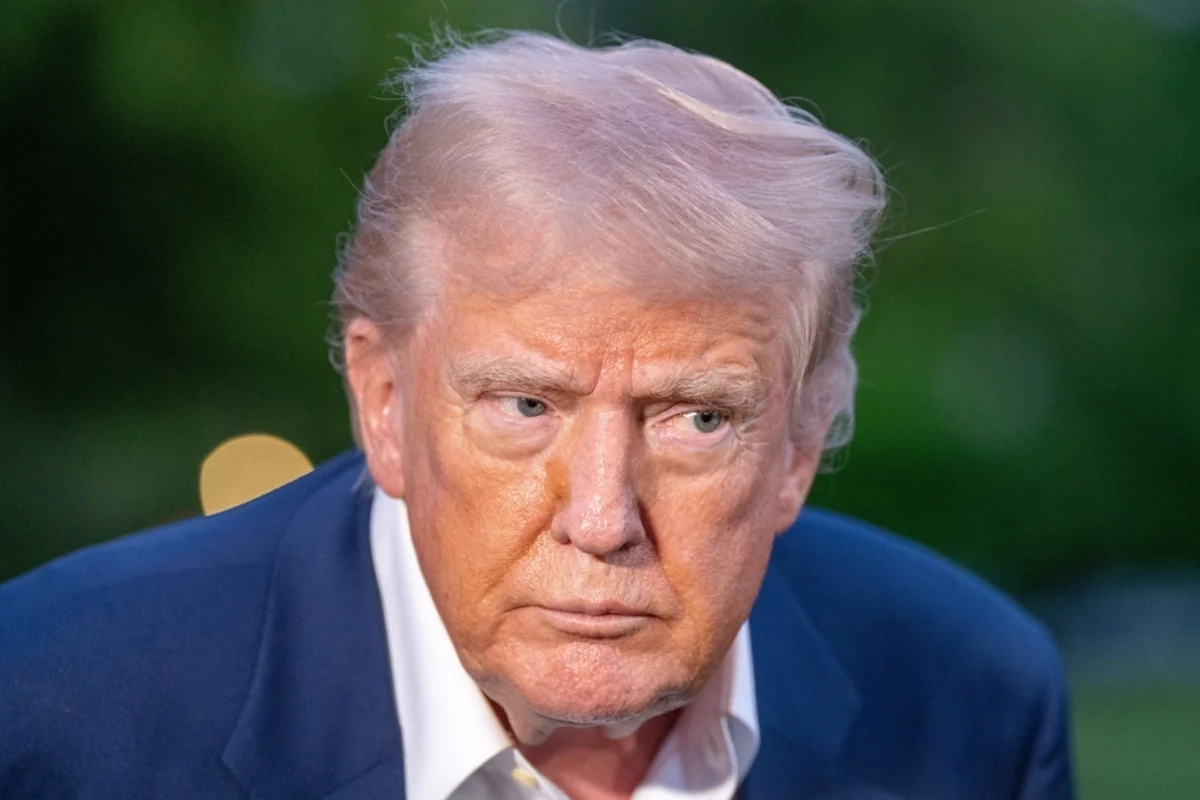
President Donald Trump is prioritizing maintaining the US advantage over China even as political, business, and international warnings grow about the risks of advancing artificial intelligence (AI) without sufficient safeguards.
Trump rejected calls to slow AI development and defended the need for the United States to maintain its lead over China despite growing concerns about the technology’s risks.
“We can put safeguards in place, we can do this and that. But I think there are many negative forces raising the issue that shouldn’t be raising it,” Trump said in Ireland, according to EFE.
U.S. President Donald Trump calls voices asking to slow down AI development «negative forces,» an opinion expressed by tech giants as warnings about risks multiply #AFP pic.twitter.com/d0k7XijyIA
— Agence France-Presse (@AFPespanol) September 13, 2026
The president said the United States currently leads the technological competition with China and made his priority clear: “Whoever wins with AI, wins.”
House Speaker Mike Johnson, a Republican, also rejected an emergency moratorium and called for meetings with companies in the sector.
Barack Obama took a different position, urging Democrats to make artificial intelligence regulation a central issue in their campaigns.
Former U.S. President Barack Obama asks party leaders to make regulating artificial intelligence (AI) a central issue in Democrats' campaigns for legislative and upcoming presidential elections. https://t.co/A3Gz99mbN6 pic.twitter.com/KZywUQxh9d
— EFE Noticias (@EFEnoticias) September 13, 2026
“This is something that is advancing very quickly in private hands, and if we don’t get on it, I think it can be dangerous,” the former president said, according to reports cited by EFE.
Obama also said anyone seeking the White House in 2028 should present a clear plan for addressing the technology’s risks.
Concerns extend beyond US politics. The United Nations warned that advances in artificial intelligence could put rights involving life, food, privacy, health, and security at risk.
Warnings are also increasing within the industry. Anthropic founder Dario Amodei called for development to proceed at a “slower pace,” while Sam Altman and Elon Musk have also expressed concerns.
Amodei cited threats including potential cyberattacks, bioterrorism, loss of control over AI systems, and economic disruption, although he rejected a complete ban on the technology.
The debate leaves Washington facing a complex decision: how to establish safeguards that reduce AI-related risks without surrendering the technological advantage over China that Trump considers strategically important.
YOU MAY ALSO LIKE: Trump’s $5,000 Check Promise Draws “Bribery” Accusations From Democrats