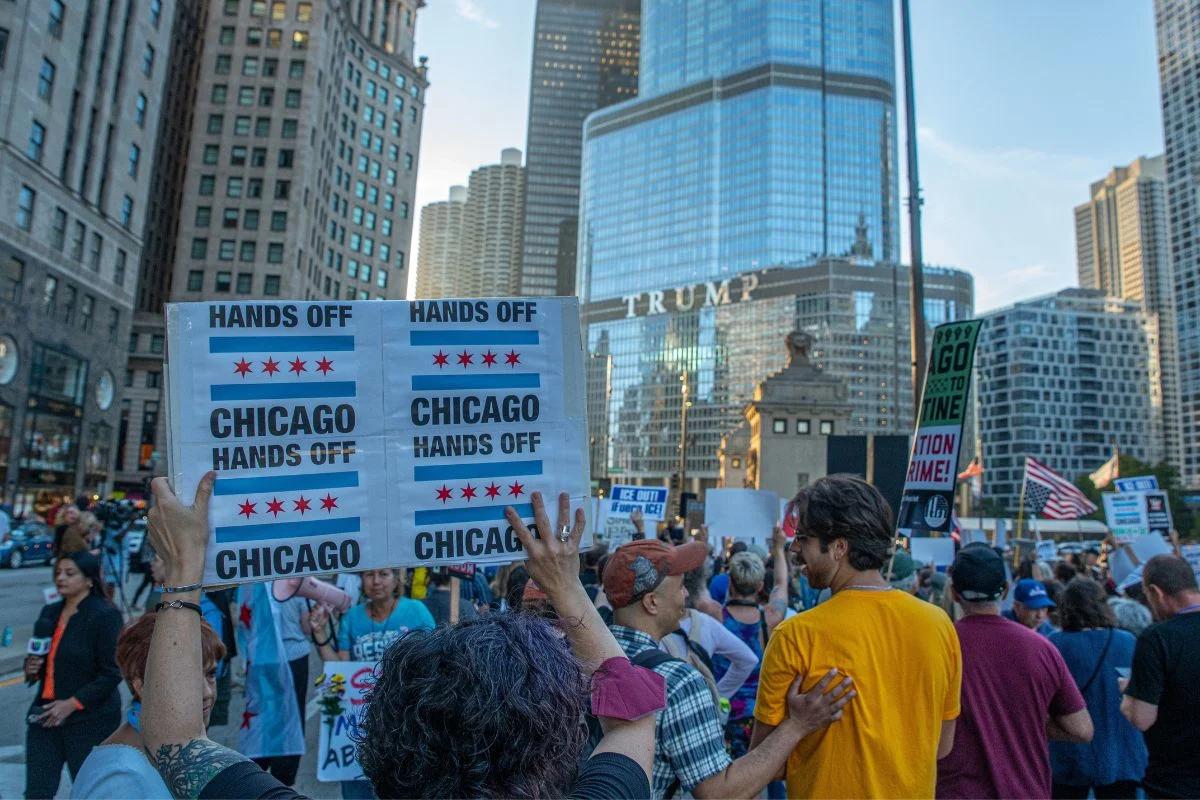
ICE raids reportedly caused $1.26 billion in lost business activity across Cook County, which includes Chicago, according to a University of Illinois Chicago (UIC) study.
Fear prompted Latino families to reduce everyday purchases and outings, while the decline in economic activity also resulted in $107 million less in local tax revenue.
Subscribe to MundoNOW for free. Receive news directly in your email.
The Midway Blitz immigration operation began on September 8, 2025, and continued for several weeks, but UIC found that its economic effects lasted much longer.
🚨🇺🇸 Fear of leaving home ultimately took its toll: the Midway Blitz immigration operation reportedly caused $1.26 billion in losses for businesses and restaurants in Cook County, in #Chicago. Many Latinx families reduced their outings to buy food,… pic.twitter.com/ncZBVR6dXM
— Eunice Rendón (@EuniceRendon) September 9, 2026
Fear of detention or encounters with federal agents prompted residents to limit activities including buying food and medicine, purchasing gasoline, and visiting banks.
The effects of ICE raids in Chicago were visible in traditionally Mexican commercial corridors including Pilsen and Little Village, although the economic losses extended far beyond these neighborhoods.
In fact, UIC found that the decline in retail activity across Cook County’s suburbs was approximately twice as large as the decline within Chicago.
WBEZ also documented significant losses among small businesses during Midway Blitz. Los Candiles, a Little Village restaurant, experienced a nearly 60% decline in in-person sales.
The loss of customers forced some establishments to shorten their business hours, reduce employees’ working hours, or implement temporary layoffs.
The losses illustrate the economic importance of Chicago's Latino community: Latinos contribute more than $100 billion annually to Illinois’ GDP, according to UIC’s Great Cities Institute.
“Latinos are workers, consumers, homeowners, business owners, and taxpayers,” said José Miguel Acosta Córdova, one of the study’s authors.
According to UIC, the $1.26 billion represents only the measurable portion of a broader economic and human cost because reduced mobility ultimately affects activity beyond Latino neighborhoods.
The question is how long these effects will last: Subsequent reports found businesses whose sales had still not fully recovered months later, demonstrating that an immigration operation can end before its economic consequences do.