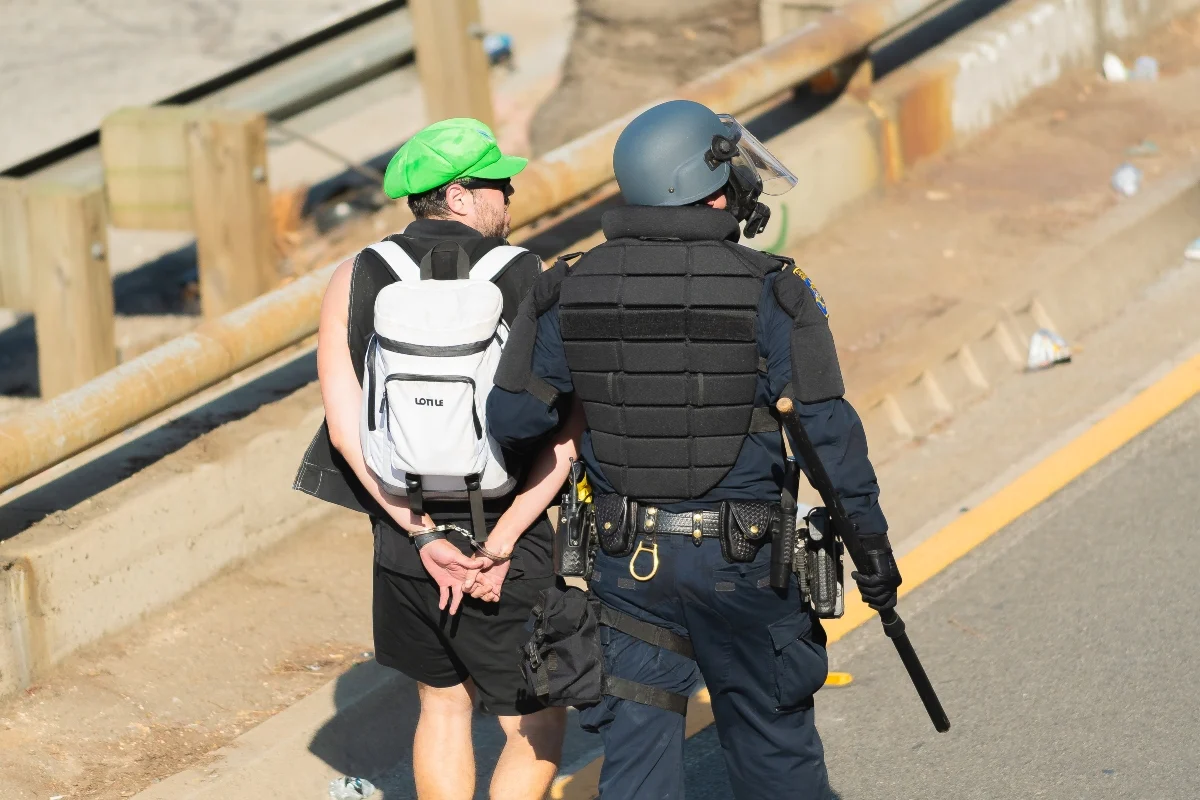
Police departments at Florida's public universities have been authorized to carry out certain federal immigration enforcement duties under agreements with US Immigration and Customs Enforcement (ICE), prompting student protests and concerns about individual rights on campus.
Florida is the only state where public university police departments participate in ICE immigration enforcement agreements, according to reporting by Florida Phoenix and a review of the agency's records.
Anti-ICE students at the University of Florida are now protesting and DEMANDING that ICE release a classmate who was detained OFF campus.
They stood on the steps of the admin building chanting «UF, let's be clear! Immigrants are welcome here!» and holding signs that say «JAIL ALL K*LLER ICE AGENTS.»
UF already said it had nothing to do with the arrest but I guess it doesn’t matter. They’re still DEMANDING the school end campus police’s agreement with ICE.
I’m sure the «JAIL ALL K*LLER ICE AGENTS» sign will really help their classmate.
— American AF (@iAnonPatriot) November 7, 2026
The agreements are part of the federal 287(g) program, which allows ICE to train and authorize state and local law enforcement officers to perform specified immigration enforcement duties under federal supervision.
According to the Miami Herald, participating Florida institutions adopted the Task Force Model, which gives trained campus officers authority to carry out certain federal immigration functions while performing their law enforcement duties.
YOU MAY BE INTERESTED: New York must share data on some Bronx shelter residents with ICE
Participating institutions include Florida International University (FIU), the University of Florida, Florida State University, Florida Atlantic University, and the University of Central Florida.
However, signing an agreement does not automatically mean immigration raids have taken place on campus. FIU has stated that its police department has not conducted immigration-related enforcement operations on its campuses since entering the agreement.
Florida university police can ask about immigration status through agreements with ICE; students protest and demand sanctions. https://t.co/75pQUHsiJp
— Uno TV (@UnoNoticias) November 10, 2026
Florida Governor Ron DeSantis issued a directive on February 19, 2025, encouraging state law enforcement agencies to cooperate with ICE through agreements that expand their role in federal immigration enforcement.
Public universities subsequently pursued similar agreements for their campus police departments, although the applicable legislation did not specifically require university police agencies to participate.
The expansion prompted concerns from university faculty members about possible immigration-related questioning and detention based on officers' assessments of an individual's immigration status.
On March 13, 2026, FIU students staged a silent protest during an event attended by university President Jeanette Nuñez.
The students wore T-shirts displaying the message «ICE OFF FIU.» Seven subsequently faced university disciplinary proceedings for allegedly violating restrictions on expressive activities inside campus buildings.
The lawsuit challenges the university's restrictions on expression under the First Amendment. It does not directly seek to invalidate FIU's agreement with ICE.
The American Civil Liberties Union (ACLU) emphasizes that people in the United States have constitutional rights regardless of their immigration status, although some legal obligations differ depending on the circumstances.
Remain silent: You can state that you wish to remain silent and ask whether you are free to leave. In Florida, you may be required to identify yourself to law enforcement during certain lawful stops.
Documents and legal assistance: Noncitizens age 18 and older who have been issued valid immigration registration documents are generally required to carry them and present them when requested by authorized immigration officers.
Students who are detained can request legal assistance and should avoid signing documents they do not understand before consulting a qualified attorney. Unlike in criminal proceedings, the government generally does not provide free appointed counsel in immigration proceedings.
Source: UNOTV