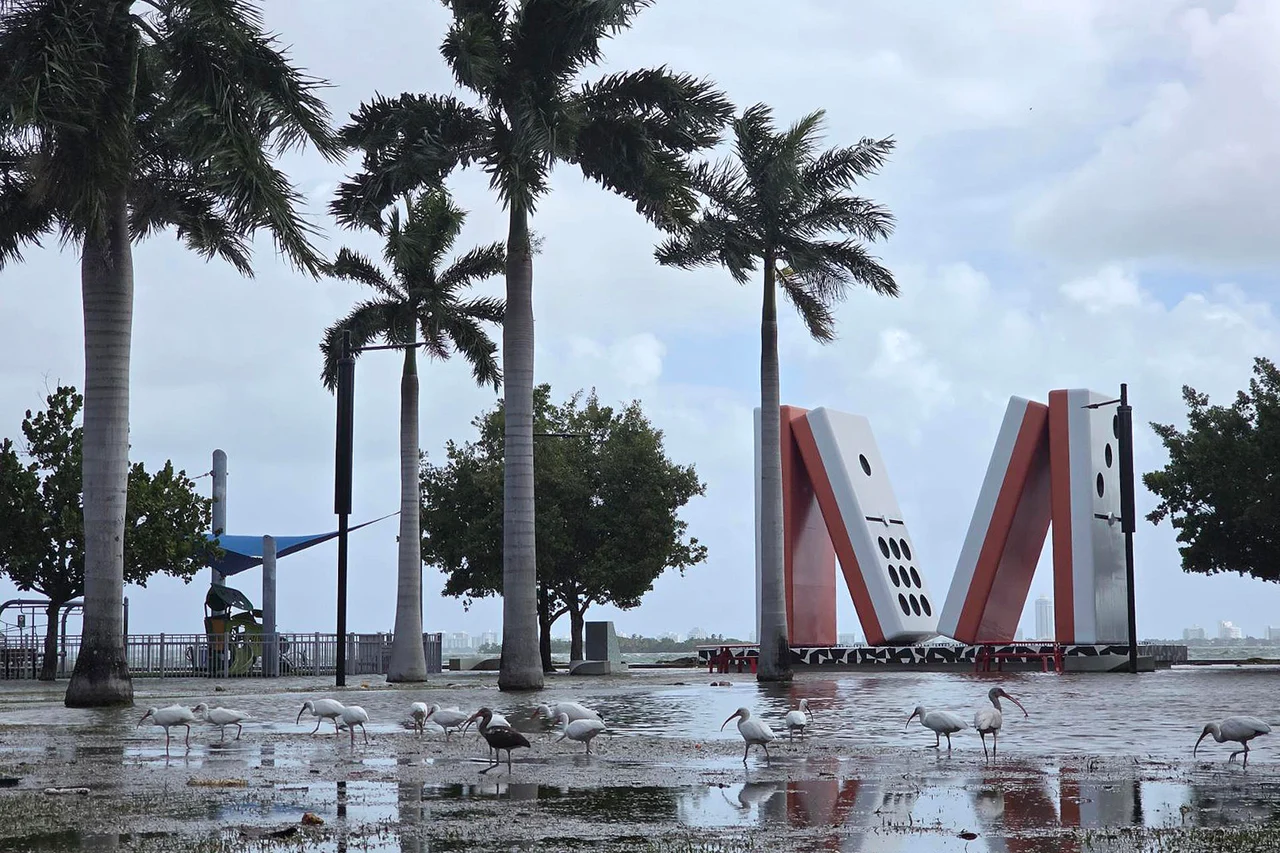
A Florida flood alert was issued by the U.S. National Weather Service ( NWS ) on Tuesday, October 27, for southeastern Florida, remaining in effect through Wednesday. According to EFE, exceptionally high tides have already flooded parts of Miami and Fort Lauderdale.
The agency warned of «potentially significant coastal flooding» across an area stretching from the Florida Keys at the state's southern tip to northern West Palm Beach.
The warning coincides with some of the highest tides of the year. Known in the United States as king tides, these exceptionally high water levels can also cause flooding in inland areas near waterways.
The NWS warned that flooding impacts would be particularly severe between 8:00 and 11:00 a.m. and between 8:00 and 11:00 p.m. local time on Tuesday and Wednesday.
Both periods coincide with high tide, when water levels reach their peak. Authorities therefore urged residents to take precautionary measures ahead of these high-risk hours.
Although the coastal flood warning remains in effect through Wednesday, the agency forecasts that «minor to moderate coastal flooding could continue through the end of the week.»
King tides occur when the gravitational forces of the Earth, Moon, and Sun align in a way that produces exceptionally high water levels.
As tides rise, water can seep through the ground and overwhelm drainage systems. As a result, streets and neighborhoods can flood even on sunny days, without storms or rainfall in the immediate area.
Strong winds and rainfall can worsen coastal flooding. The effects of king tides are not limited to streets directly along the oceanfront.
According to the South Florida Water Management District (SFWMD), the current period of exceptionally high tides runs from October 24 through October 30.
The agency also identifies two additional king tide periods: November 6–9 and November 23–26. These dates represent predicted high-tide events, not an automatic extension of the current coastal flood warning.
Miami-Dade County urged residents to move their vehicles to higher ground before high tide begins.
The county also advised against walking or driving through flooded areas because of health hazards and potential property damage. If a vehicle comes into contact with saltwater, officials recommend rinsing it afterward with freshwater.
Sea levels along Florida's southeastern coast have risen by approximately 30 centimeters, or 12 inches, since 1870, according to the latest World Resources Institute (WRI) report cited by EFE.
By comparison, the global average sea-level rise over the same period was approximately 20 centimeters, or 8 inches.
The WRI identifies Florida as the U.S. region «most vulnerable» to climate change impacts associated with rising sea levels, flooding, and increased cyclone activity.