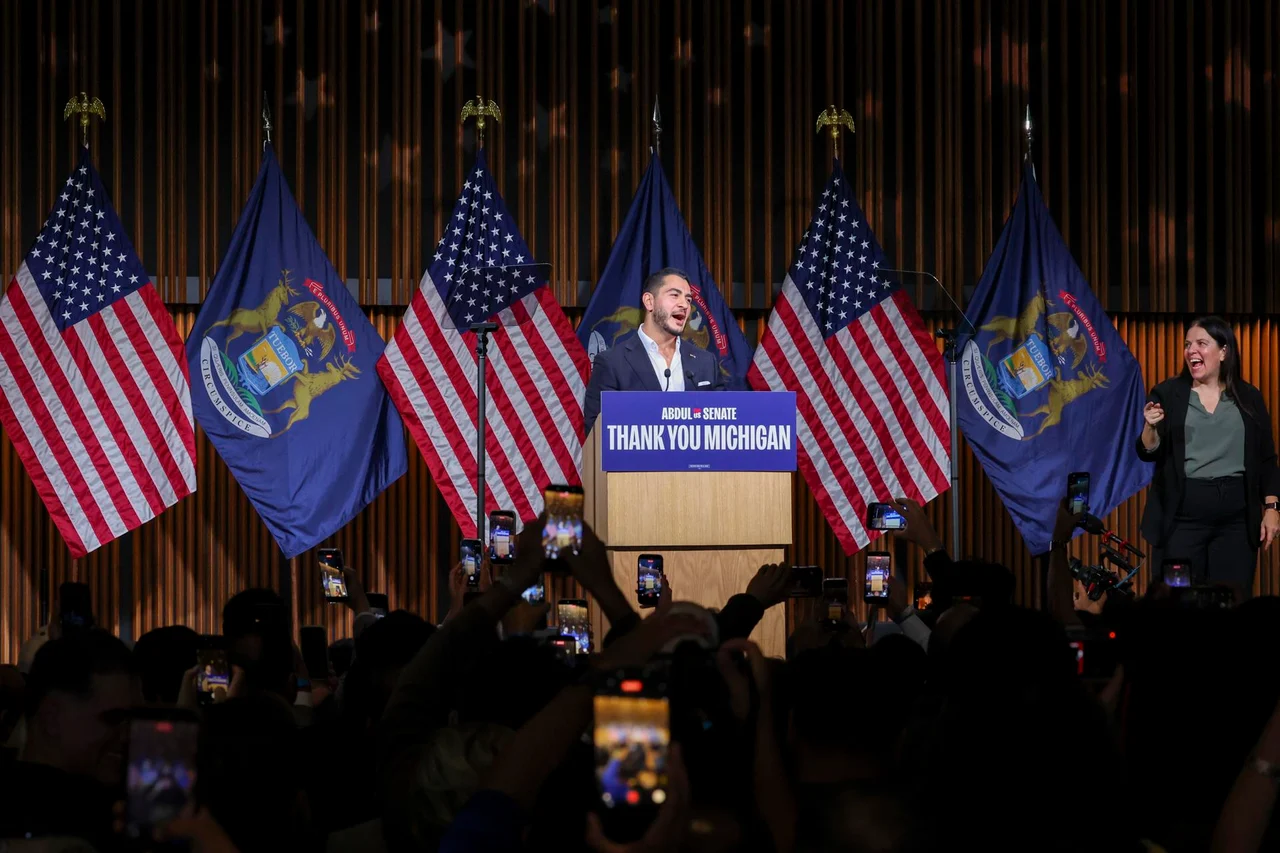
Abdul El-Sayed, a 42-year-old Democrat, won Michigan Senate race and will become the first Muslim senator in American history, according to projections by CNN and the Associated Press (AP) reported by EFE. He defeated Republican Mike Rogers in the November 3, 2026, midterm elections.
Why it matters: The election of a progressive Muslim candidate in a key battleground state marks a historic first for the US Senate and highlights the influence of the Democratic Party's progressive wing, associated with Senator Bernie Sanders. According to The Guardian, El-Sayed's victory also contributes to the Democrats' newly secured Senate majority.
A physician, epidemiologist, and former public health official, El-Sayed has described himself as one of the «most unlikely» candidates. Here is his background:
According to El Mundo, El-Sayed was raised by his father, Mohamed El-Sayed, an Egyptian engineer who immigrated to the United States to pursue a doctorate at Wayne State University in Detroit, and his stepmother, Jackie, also an engineer. At 30, he became director of the Detroit Health Department. He later led Wayne County's Health and Human Services Department, leaving the position in April 2025 to campaign for the Senate. According to Europa Press, he also served as a national representative for Sanders' 2020 presidential campaign.
El-Sayed secured the Democratic nomination in August after defeating Representative Haley Stevens in the primary. According to Europa Press, Stevens appeared alongside Rogers at a religious event in Detroit shortly before the election and was subsequently expelled from the Michigan Democratic Party.
During the final stretch of the campaign, El-Sayed faced attacks from Donald Trump that critics described as Islamophobic, according to El Mundo. Trump suggested that a metal detector should be installed at the Senate if El-Sayed won. The Democratic candidate responded: «I'll go through a metal detector if you undergo a lie detector test.» The Guardian also reported that Trump and Republican allies made attacks targeting El-Sayed's Muslim faith.
On Election Day, Tuesday, November 3, Trump announced that approximately $4 billion in annual US aid to Israel would end at the close of the year and referenced El-Sayed. According to Fox News, Trump said: «Why should we suffer the attacks of lunatics like an El-Sayed when they don't need it?»
Early Wednesday morning, November 4, El-Sayed criticized his opponents during a victory speech, saying they had resorted to «one of the ugliest campaigns we've seen in our lifetimes,» according to ABC News. Before major news organizations projected his victory, he had already declared himself the winner in Detroit, thanking those who volunteered, donated, and supported what he described as one of the most unlikely candidacies.
El-Sayed ran on a progressive economic platform focused on Medicare for All, support for working-class Americans, and reducing corporate influence in politics. He rejected corporate campaign contributions, advocated campaign finance reform, and opposed US military assistance to Israel, an issue Trump repeatedly raised in his criticism.
Rogers, meanwhile, emphasized tax cuts, support for the manufacturing industry, and his alignment with Trump. According to EFE, the loss marks Rogers' second unsuccessful bid for the US Senate.
El-Sayed is expected to take office when the new Congress convenes on January 3, 2027. His early legislative efforts will provide an indication of how he seeks to advance his policy priorities in a chamber where Democrats have secured a majority, according to The Guardian.
In his victory speech, the senator-elect expressed his hope of bringing the support and inspiration he received from Michigan voters to Washington and delivering the leadership they deserve.
Sources: EFE via Swissinfo; Europa Press; El Mundo; The Guardian. Data consulted on November 4, 2026.
Main photo: EFE/EPA/Sarah Yenesel